
Why is the Swiss franc so stable?
First of all, it is important to mention that the Swiss franc is the currency of two states: Switzerland and Liechtenstein. Here are a few factors that contributed to the strengthening of the Swiss franc:
- Political stability and the rule of law.
- Switzerland managed to stay neutral in both world wars of the 20th Needless to say, Swiss banks became a repository of capital from the warring countries.
- Switzerland did not want to become a member of the European Union, a referendum was held on this issue. The Swiss franc was not replaced by the euro and The Swiss National Bank could pursue a more independent policy.
- Switzerland created laws to strengthen its own currency. Until 2000 the Swiss Bank was required to keep 40% of its reserves in gold.
- Nowadays the Swiss National Bank maintains the eighth largest gold reserve in the world.
- A low inflation rate over the years.
- There is an ongoing debt crisis in the European Union which started a long time ago. The US has a loose monetary policy. The euro and the dollar are becoming cheaper, this leads to the strengthening of the Swiss franc rate.
Due to these and other factors, the Swiss franc continues to be a stable currency and attracts investors from all over the world.
How did the Swiss franc exchange change?
However, the Swiss franc had its ups and downs. There has recently been an event that could frighten many investors and call into question the competence of the Swiss National Bank. This happened on January 15, 2015. Let’s have a look at the Swiss franc exchange rate chart: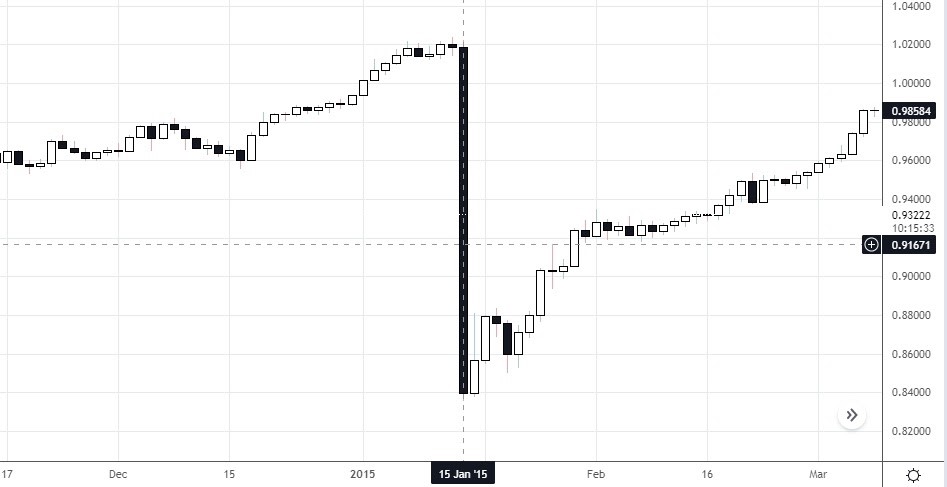
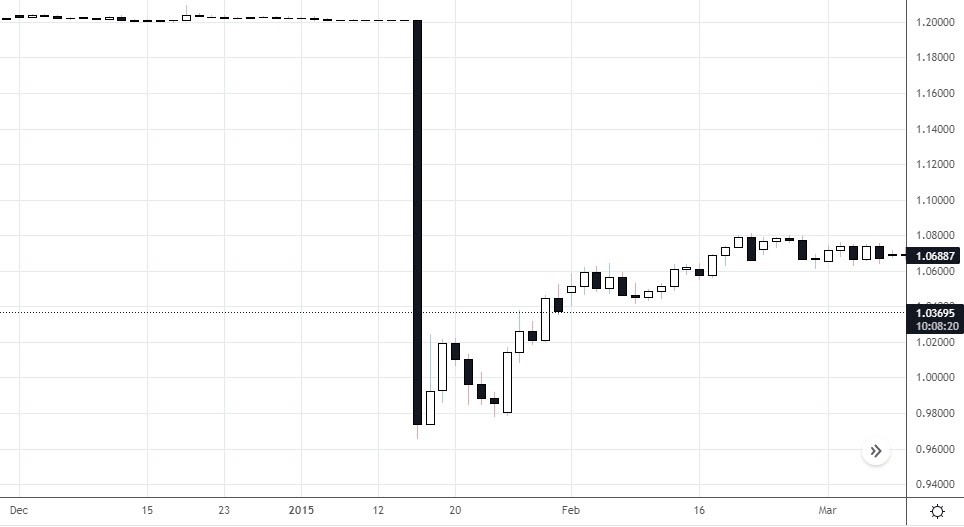
The Swiss franc gained ground in one day. Why did such a collapse happen? Let’s have a look at the chronology of events:
- The financial and economic crisis of 2008 caused the demand for the Swiss franc as a safe-haven currency to rise sharply.
- The Swiss franc exchange rate appreciated to the dollar and the euro over the years.
- Foreign goods became cheaper in Switzerland, but home-made goods became more expensive. This caused Swiss business to suffer.
- In 2011, the Swiss Bank abandoned its floating exchange rate policy and pegged the franc to the euro at a rate of 1,2000. Such unnatural slowing down of the exchange rate was contrary to the objective economic process and did not develop a lasting existence.
On January, 15, 2015, the Swiss Bank unexpectedly abandoned its previous policy of holding the exchange rate, followed by a collapse. As a result of this collapse some brokerage and investment companies went bankrupt.
What conclusion can private traders and investors draw from these events?
- Experienced traders can make a big profit by using news from central banks. The ATAS trading platform can help with volume analysis and trading in currency futures.
- These events show investors the importance of diversification and investment in currencies of different countries. Since extraordinary things can happen even to stable currencies like the Swiss franc.
The Swiss franc exchange rate to USD, what to expect in 2022?
Let’s have a look at the chart of the Swiss franc futures from the Chicago Futures Exchange. The dynamics of these futures are inversely proportional to the dynamics of the USDCHF currency pair chart.
The chart from the ATAS analytical platform shows the movement of the futures for the last 6 months of 2021. The “TPO and Profile” tool shows volume accumulation by large traders. Volumes are pushing the price down, so the forecast for the Swiss franc is: in early 2022, the downward trend is likely to continue and the Swiss franc will weaken to the dollar.
The Swiss franc exchange rate to euro, what to expect in 2022?
Firstly, let’s have a look at the EUR – USD rate in order to understand the global trend better. In order to do this, we need to analyze the euro futures chart from the Chicago Futures Exchange: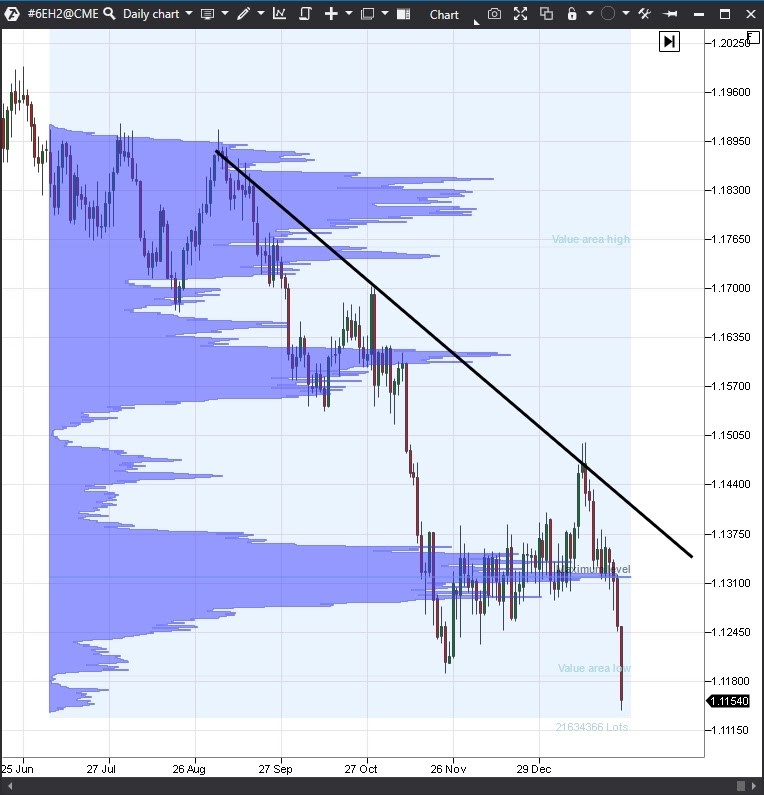
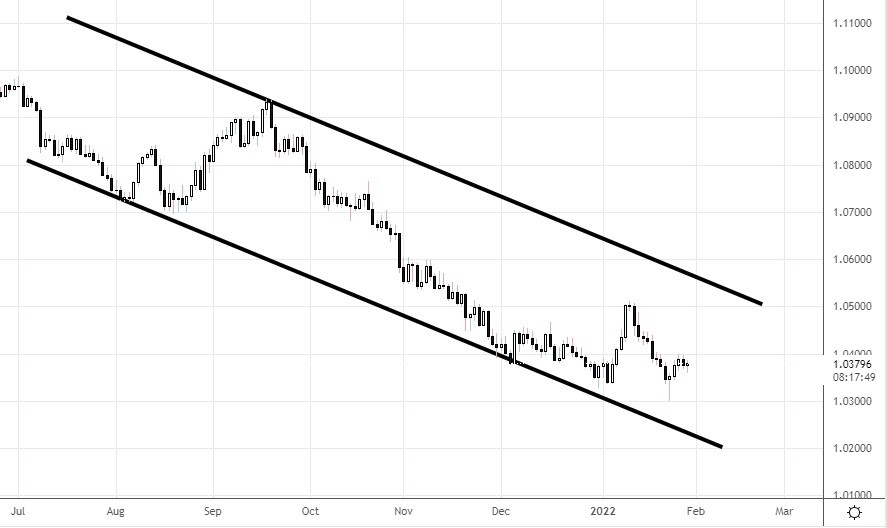
Euro futures were falling rapidly for the last 6 months of 2021. The maximum volumes pushed the price down on a regular basis, so in the first months of 2022 the euro futures will probably continue to move down. In the pre-crisis state, the dollar as a world currency might be strengthening against all currencies in the short term. The chart shows that the euro futures are falling much faster than the Swiss franc futures. It can therefore be concluded that the EURCHF currency pair is likely to fall in early 2022:
The Swiss franc exchange rate to Russian ruble, what to expect in 2022?
In order to understand the exchange rate of the Swiss franc to the ruble let’s have a look at the futures chart for the ruble from the Chicago Futures Exchange:

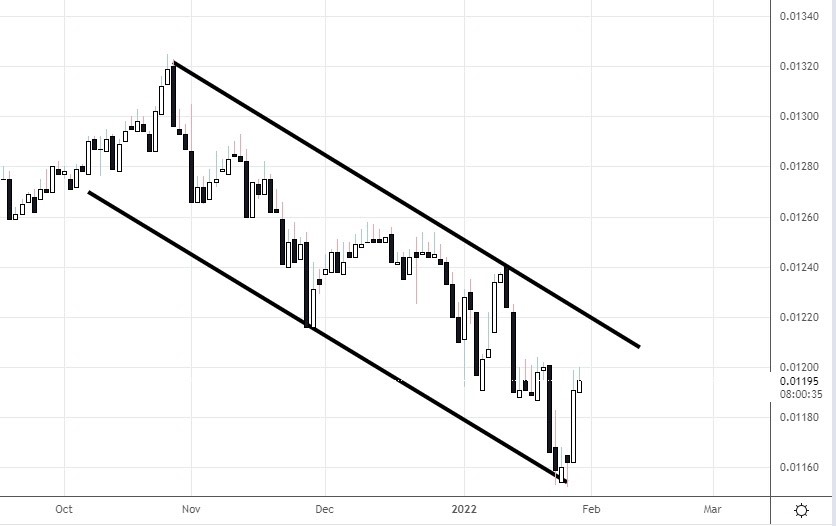
How to raise and save your capital with the Swiss franc?
The Swiss franc futures from the Chicago Futures Exchange can be a good liquid instrument for traders.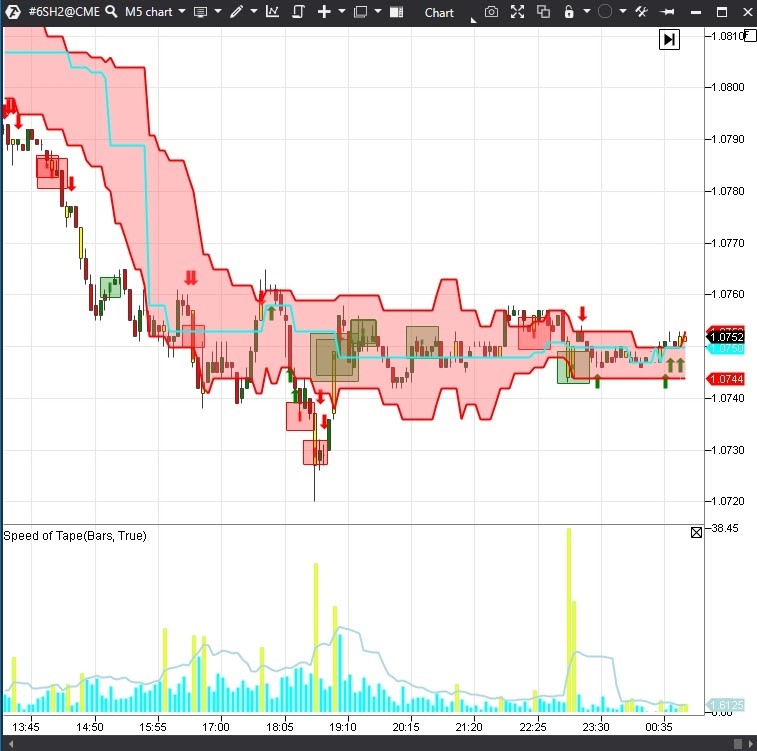
Volume analysis indicators of the ATAS trading and analytical platform help a trader to see important market points and trade using this understanding.
The Swiss franc is an important safe-haven currency for investors. It is better to keep capital in different currencies in terms of diversification. You can buy the Swiss franc at the optimal rate with minimal commissions by buying a Swiss franc futures contract. However, you will have to monitor expiration and switch to new contracts.
Conclusions and recommendations
The Swiss franc is an important instrument in the global financial system. Therefore, it is important to learn how to use it correctly.- For everyone. Keep part of your own savings in Swiss francs.
- For traders. Learn to trade Swiss franc futures using the tools of the ATAS trading and analytical platform. The platform offers various benefits.
- For investors. Buy Swiss franc futures in the long term. The Swiss franc may fall in price in the short term, but in the long term it has been rising for many years in a row.
Information in this article cannot be perceived as a call for investing or buying/selling of any asset on the exchange. All situations, discussed in the article, are provided with the purpose of getting acquainted with the functionality and advantages of the ATAS platform.