Адрес кошелька — это уникальный идентификатор, состоящий из букв и цифр, который используется для отправки и получения криптовалют, таких как Bitcoin, Ethereum, USDT и других. В этой статье мы разберем основные вопросы, связанные с использованием криптокошельков, а также расскажем, как избежать ошибок и минимизировать риски при обращении с ними.
Ты узнаешь:
1. Что такое адрес кошелька? Примеры
2. Где получить адрес криптовалютного кошелька
3. Как проверить адрес? Часто задаваемые вопросы
4. Ошибки и риски, связанные с адресами
5. Советы по безопасному использованию
Адрес кошелька: что это такое и как его узнать
Адрес криптокошелька можно сравнить с номером банковского счета – он позволяет другим пользователям знать, куда отправлять криптовалюту.
Адрес крипто кошелька может представлять собой:
- длинную последовательность букв и цифр,
- QR-код для удобства сканирования.
QR-код и последовательность букв и цифр взаимозаменяемы. С помощью QR-кода отправка криптовалюты становится проще: достаточно отсканировать его вместо ручного ввода адреса или копирования и вставки.
Важно отметить, что каждый адрес криптовалютного кошелька связан с определенной криптовалютой и конкретной блокчейн-сетью. Адреса для одной и той же криптовалюты в разных сетях будут отличаться.
Проще говоря, если в обычный физический кошелек ты можешь положить и доллары, и евро, и купоны на скидку в соседнем магазине, то для крипто кошельков так не получится.
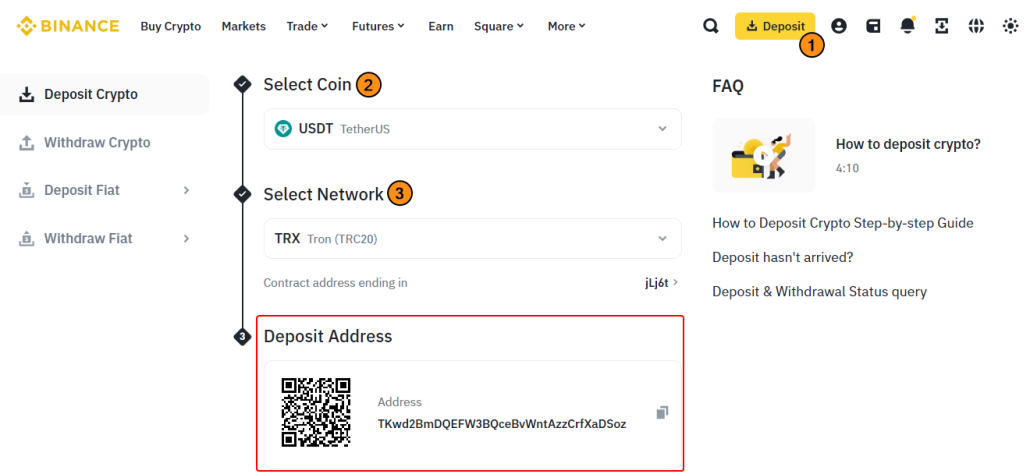
Пример адреса для получения USDT в сети Tron (TRC-20) – на скриншоте выше.
Как узнать адрес кошелька USDT на Бинансе?
В своем кабинете нажми на Deposit (1), затем выбери (2) USDT в качестве криптовалюты (Coin) для получения. После этого укажи (3) Tron (TRC-20) как блокчейн-сеть (Network). Затем в нижней части ты получишь адрес своего кошелька USDT (TRC-20) на Binance.
Адрес кошелька: пример
Зная адрес, ты можешь получить развернутую информацию по кошельку, включая сумму криптовалюты, которая там хранится. Эти данные получают через блокчейн эксплорер.
Адреса BTC в сети Bitcoin обычно начинаются с чисел 1 или 3.
Пример – адрес 1A1zP1eP5QGefi2DMPTfTL5SLmv7DivfNa. Это адрес, куда был замайнен первый блок Bitcoin (также известный как блок номер 0 или блок генезиса) Сатоши Накамото в 2009 году. Иногда в этот кошелек поступают переводы от благодарных пользователей криптовалют.
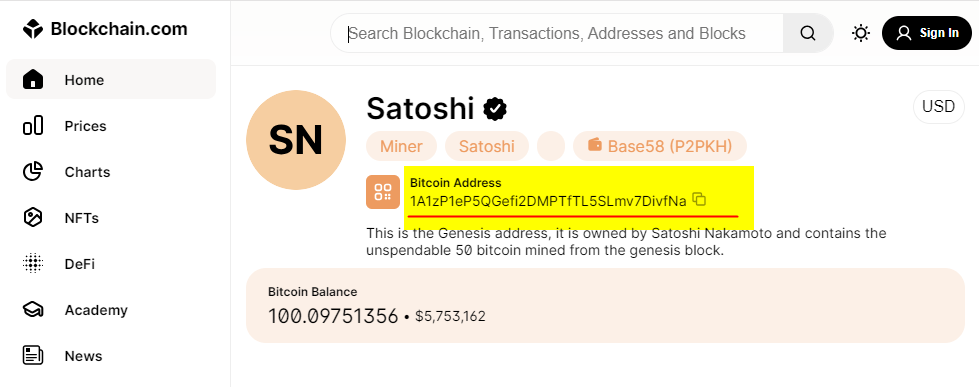
Ethereum: Адреса в сети Ethereum начинаются с ‘0x’. Это префикс, указывающий на шестнадцатеричный формат данных в Ethereum-блокчейне. Адреса Ethereum всегда имеют длину 42 символа. Но длина адресов может быть разной даже в одной сети. Например, Биткоин-адреса имеют длину 26-35 символов.
Dogecoin: Большинство адресов Dogecoin начинаются с буквы ‘D’, но существуют исключения.
Tron: Адреса в блокчейне Tron обычно начинаются с буквы ‘T’. Это типичный формат для идентификации в этой сети.
Где взять адрес крипто кошелька
Адрес криптовалютного кошелька можно получить несколькими способами, в зависимости от того, какой тип кошелька ты используешь, будь то:
- онлайн-кошельки на Binance или другой криптобирже;
- мобильные кошельки;
- аппаратные кошельки;
- десктопные кошельки.
Онлайн-кошельки
Это кошельки, предоставляемые криптовалютными биржами (например, Binance, Bybit, Coinbase) или другими онлайн-сервисами. После регистрации (и обязательной верификации) биржа сама сгенерирует тебе адреса кошельков, которые можно использовать для получения и отправки криптовалют.
Пример с получением адреса для USDT(TRC-20) на Binance показан выше. Эта логика применима и на других биржах, вот как это выглядит на BitGet, практически аналогично:
Нажимаешь Deposit → Выбираешь криптовалюту / сеть → Получаешь адрес
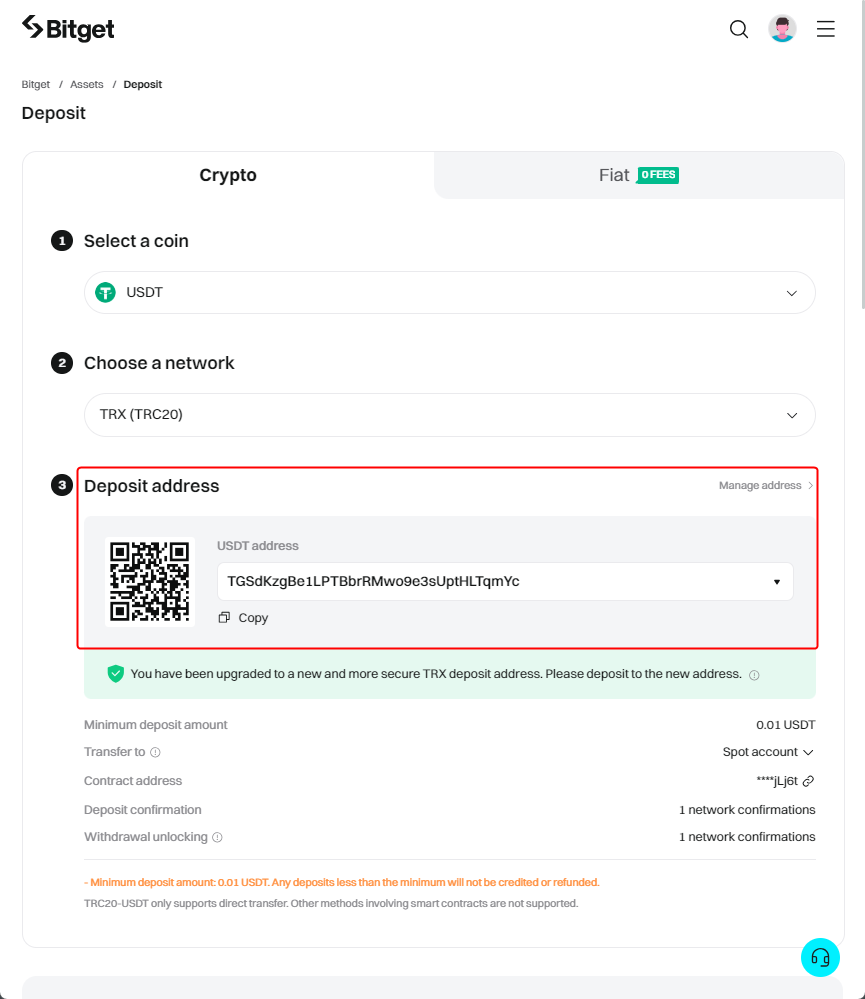
Как видно на скриншоте (обведено красным), биржа выдает адрес в виде:
- последовательности букв и цифр;
- QR-кода.
Обрати внимание на условия для пополнения: минимум для пополнения, размер комиссии, количество подтверждений (это влияет на скорость зачисления средств).
Если условия подходят, используй адрес для зачисления на него криптовалюты. Обычно она зачисляется на секцию Spot. Потом, например, ты можешь перевести ее на секцию Futures, чтобы торговать криптовалютами, используя преимущества торгово-аналитической платформы ATAS.
Мобильные кошельки
Это приложения для смартфонов, которые можно скачать из App Store или Google Play. После установки приложения ты можешь создать новый кошелек, и тебе будет предоставлен адрес.
Пример. Telegram Wallet – это мобильный кошелек. Чтобы взять адрес крипто кошелька в Telegram, для начала убедись, что у тебя установлен кошелек в твоем приложении Telegram. Затем:
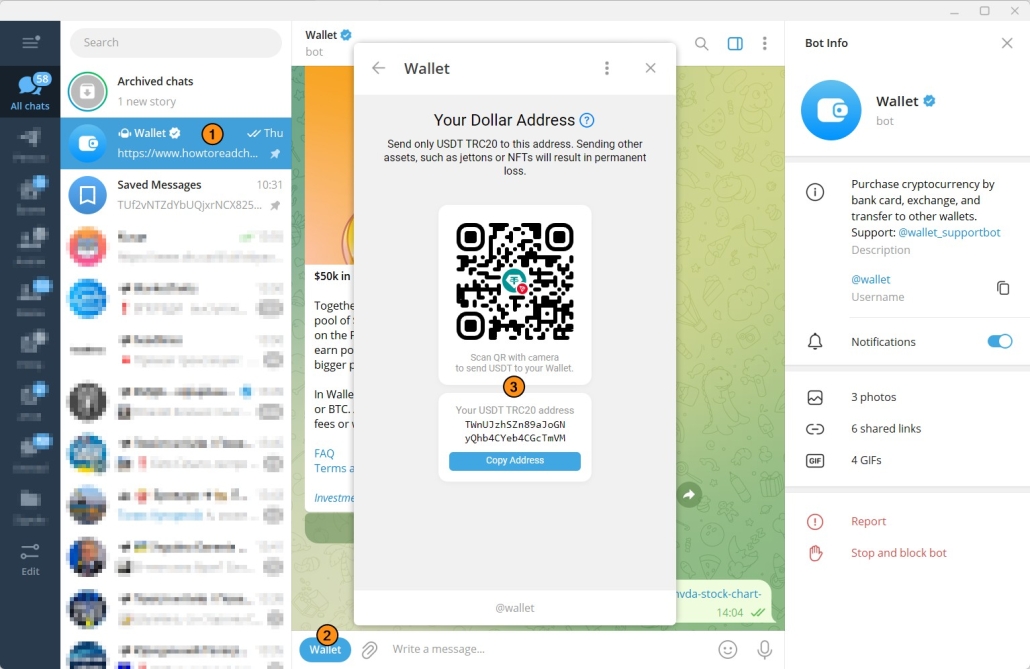
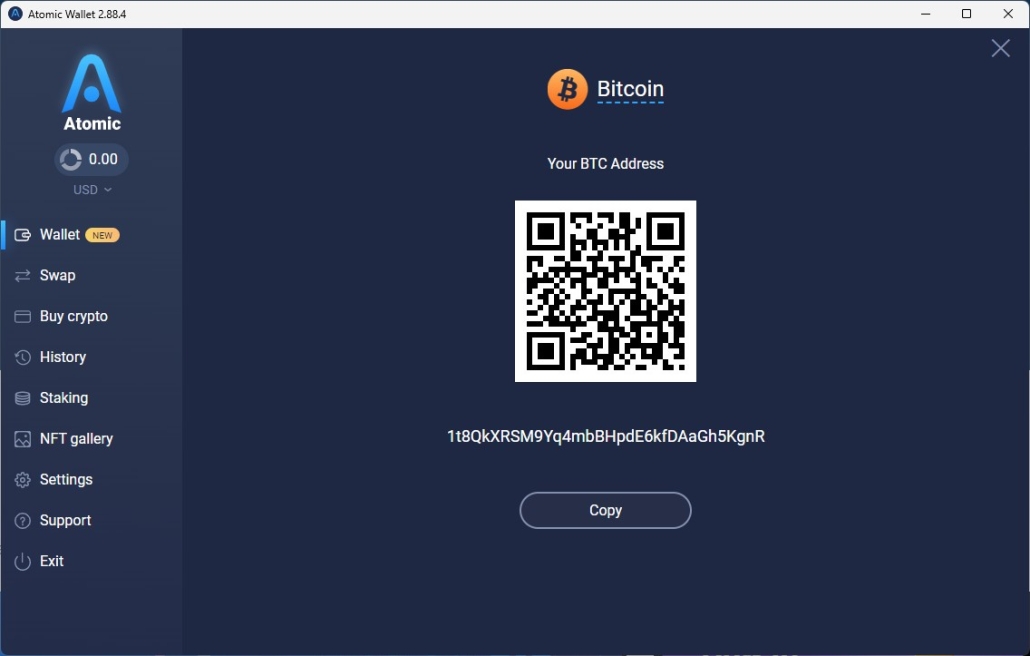
Переходишь в Wallet → выбираешь криптовалюту / сеть → получаешь адрес в виде QR-кода / набора букв и цифр.
FAQ
Как создать адрес кошелька?
Сначала нужно выбрать и установить кошелек (для этого достаточно зарегистрироваться на криптовалютной бирже). Потом кошелек автоматически генерирует адрес для криптовалюты, который ты можешь использовать для получения и отправки средств.
Как генерируются адреса?
Адреса генерируются из закрытых ключей вашего кошелька с помощью криптографических алгоритмов.
Что такое закрытые и публичные ключи криптовалютного кошелька?
Закрытый ключ – это секретный код, который используется для подписи транзакций и обеспечения доступа к средствам на кошельке, его необходимо держать в тайне и никогда не раскрывать. Публичный ключ производится из закрытого ключа и используется для генерации адресов и получения криптовалют. Оба ключа работают в паре для обеспечения безопасности и функционирования криптовалютных транзакций в блокчейн-сети.
Можно ли публиковать адреса?
В целом, сообщать свой адрес любому, кто отправляет вам криптовалюту, безопасно. Однако имей в виду, что любой, у кого есть твой адрес, может найти его в Block Explorer и просмотреть историю транзакций и баланс этого адреса.
Как проверить адрес кошелька usdt?
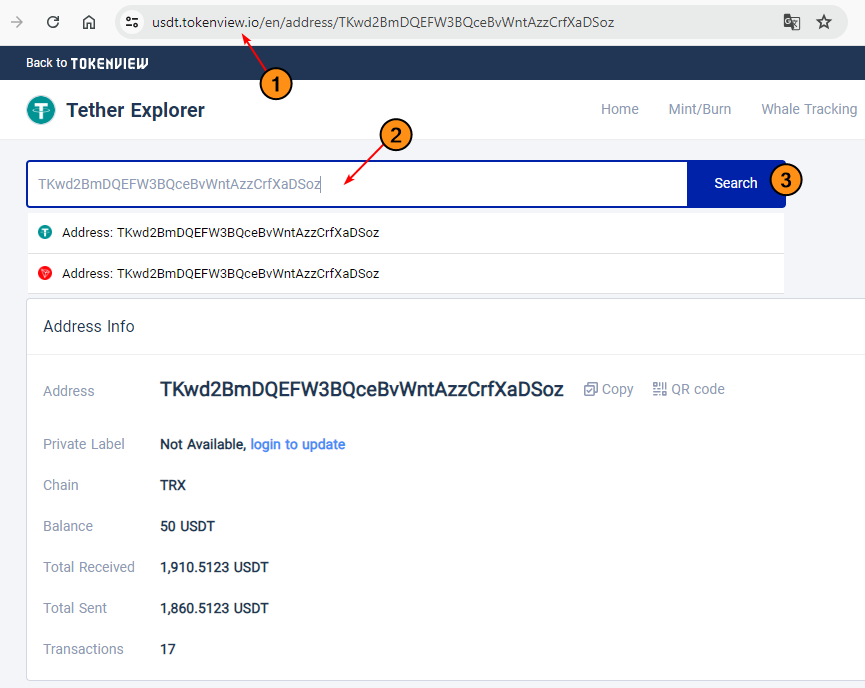
Чтобы проверить адрес кошелька USDT, используй блокчейн эксплорер, соответствующий той блокчейн-сети, в которой выпущен USDT (например, Ethereum, TRON или Omni).
Например, зайди на tokenview (1) или любой другой эксплорер, затем введи адрес кошелька в поисковую строку (2), и нажми Search (3). Ты сможешь увидеть все транзакции, а также текущий баланс, связанный с этим адресом. Это поможет подтвердить, что адрес действителен и активен.
Чувствительны ли к регистру адреса криптокошельков?
Как правило, да.
Что такое мультиподписные адреса?
Мультиподписные адреса (от англ. multisig – мультиподпись) – это тип адресов, который требует нескольких подписей для авторизации транзакции. Мультиподписные адреса используются для повышения уровня безопасности, так как для выполнения транзакции необходимо согласие нескольких сторон.
Что такое сид фраза?
Сид фраза, известная также как мнемоническая фраза или сид-фраза восстановления (Backup Phrase), это набор из 12 или 24 слов, которые используются для генерации и восстановления криптовалютных кошельков. Эти слова представляют собой удобную для человека форму криптографического сида, который служит источником для создания приватных ключей кошелька.
Можно ли отменить транзакцию?
Чаще всего, отменить транзакцию криптовалюты после её подтверждения невозможно. Согласно технологии блокчейн, однажды совершенная транзакция становится постоянной частью цепочки и не может быть изменена или отозвана.
Какой кошелек лучше использовать?
Это выбор баланса в вопросах безопасности, удобства и типа операций с криптовалютой:
- Аппаратные кошельки. Для максимальной безопасности лучше использовать холодные кошельки, такие как Ledger или Trezor, так как они хранят ключи вне сети и устойчивы к онлайн-атакам.
- Десктопные и мобильные кошельки. Exodus или MetaMask удобны для частых транзакций.
- Кошельки на криптобиржах подойдут, если ты связан с трейдингом криптовалютами.
Ошибки и опасности, связанные с крипто кошельками
Адреса криптовалютных кошельков, хоть и являются относительно простым элементом, тем не менее – сопряжены с рядом ошибок и рисков:
Ошибка при вводе адреса. Это одна из наиболее частых неприятностей. Ошибка в одном символе может привести к потере средств, так как они будут отправлены на несуществующий или чужой адрес.
Атаки на буфер обмена. Некоторые вирусы следят за содержимым буфера обмена. Когда пользователь копирует адрес кошелька для вставки при выполнении транзакции, вредоносное ПО может заменить его на адрес кошелька мошенника.
Махинации с QR-кодами. Мошенники могут предварительно вводить суммы в QR-коды, поэтому проверьте сумму криптовалюты, прежде чем нажать «Отправить».
Фишинг и социальная инженерия: Мошенники используют различные методы, чтобы получить твои средства. Например, они могут:
- убеждать тебя предоставить ключи якобы в целях безопасности;
- совершить транзакцию на свои адреса под различными предлогами;
- создавать для этого фиктивные сайты и трансляции на Youtube.
Советы при работе с адресами кошельков
Следи за анонимностью. Все транзакции в большинстве блокчейнов открыты для просмотра, и если твой адрес станет известен широкому кругу лиц, любой сможет отслеживать транзакции и балансы.
Храни сид-фразы в безопасности. Это критически важно, так как сид-фраза позволяет восстановить доступ к кошельку и связанным с ним средствам в случае потери или повреждения устройства.
Не делись ни с кем закрытыми ключами. Только владелец закрытого ключа адреса может получить доступ к средствам.
Проводите тестирование. Если это возможно, рассмотри отправку вначале небольшой суммы на новый адрес. Да, это означает увеличение комиссии, но зато ты снижаешь риски.
Проверяй адрес перед отправкой. Лучше использовать Copy&Paste. Но независимо от способа ввода адреса кошелька, проверь весь адрес и каждый отдельный символ. Убедитесь, что все символы на месте, все символы в правильном порядке и что заглавные буквы правильные.
Если ты отправишь, например, USDT на неправильный адрес, и захочешь проверить адрес кошелька, чтобы узнать адрес владельца для связи – у тебя ничего не получится. Блокчейн эксплореры не содержат никакой идентифицирующей информации, другими словами, ты не сможешь увидеть, кому принадлежит адрес.
Также рекомендуем использовать двухфакторную аутентификацию для защиты своих аккаунтов.
Выводы
Адреса могут выглядеть как QR-код или как комбинация букв и цифр.
Адреса учитывают тип криптовалюты и сеть. Например, USDT (TRC-20) означает Tether в сети Tron.
Адреса криптокошельков могут использоваться для отправки и получения криптовалют, аналогично традиционному банковскому счету.
Если ты трейдер, адреса кошельков пригодятся для перевода средств между биржами.
Скачай бесплатно ATAS. С этой программой ты получишь доступ к профессиональным инструментам, чтобы торговать Bitcoin, Ethereum и другими криптовалютами с подключением к Binance, Bybit и другим криптобиржам при этом, копируя сделки между счетами.
С ATAS ты можешь получить преимущество над другими трейдерами используя:
- DOM Levels, профили рынка и другие индикаторы;
- ATAS Smart DOM, ATAS Smart Tape;
- тренажер для трейдера Market Replay;
- произвольные таймфреймы, гибкие настройки и многое другое.
После установки ATAS автоматически активируется бесплатный тариф START — тебе будут доступны торговля криптовалютами, а также базовый функционал платформы. Ты можешь пользоваться им, сколько посчитаешь нужным, пока не решишь перейти на более продвинутый тарифный план, чтобы расширить доступ к инструментам ATAS. Кроме того, в любой момент ты можешь активировать Free Trial — 14 дней бесплатного доступа к полному функционалу платформы, которые помогут оценить преимущества старших тарифов и принять взвешенное решение о покупке.
Не пропусти следующую статью в нашем блоге. Подписывайся на Youtube-канал, Facebook, Instagram, Telegram или X, где мы публикуем последние новости ATAS. Делись лайфхаками и обращайся за советами к другим трейдерам в Telegram-чате @ATAS_Обсуждения.
Информация в этой статье не может быть воспринята как призыв к инвестированию или покупке/продаже какого-либо актива на бирже. Все рассмотренные в статье ситуации описаны с целью ознакомления с функционалом и преимуществами платформы ATAS.